MEDIA COVERAGE
PGED Interview with Dorothy Semenow
In this special Spotlight feature, Gill McNeil interviews Dr. Dorothy Semenow, who talks about her past, present, and the first steps for her exciting future projects.

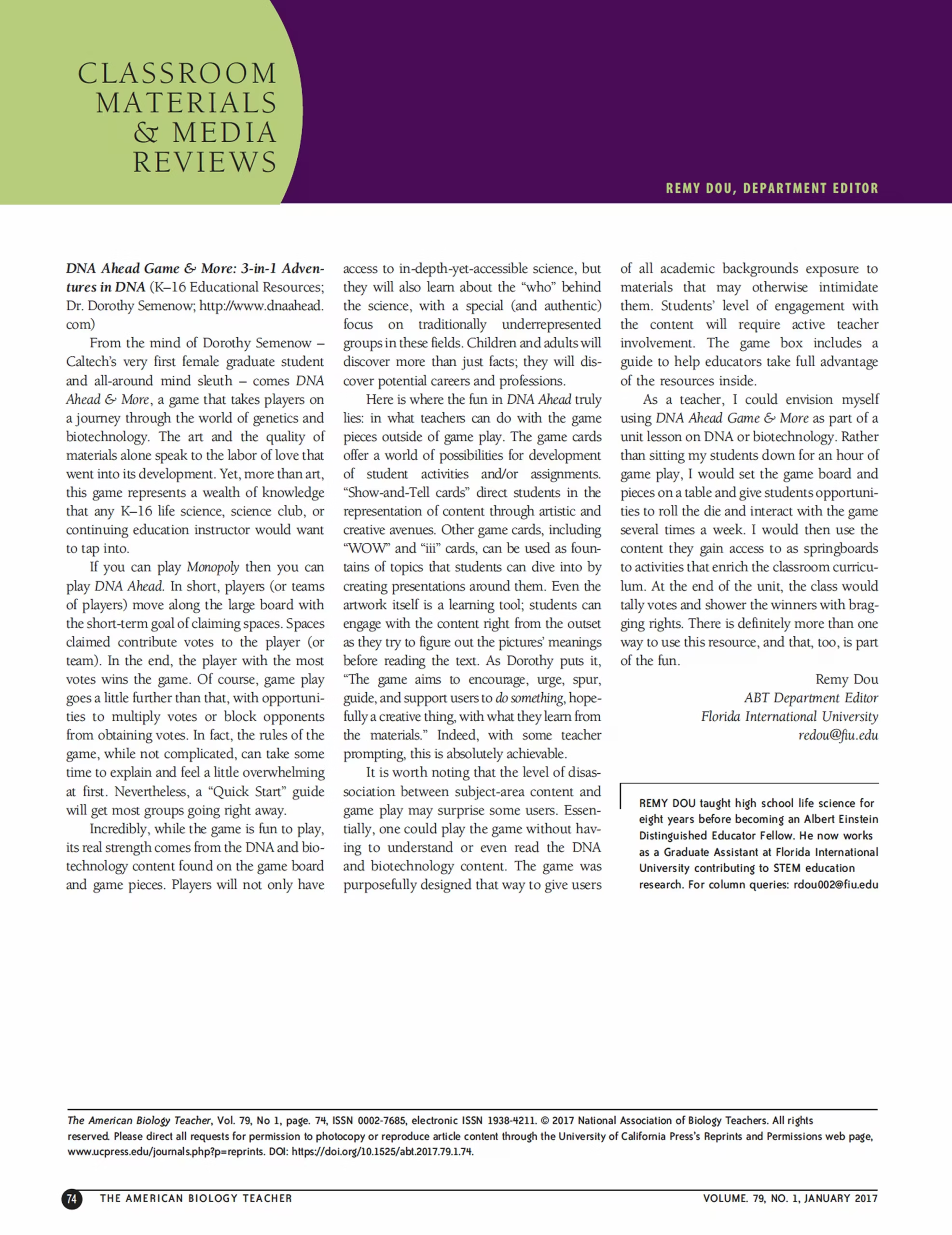
AWIS Interview with Dorothy Semenow
“From CalTech Pioneer to Science Edutainer.” Association for Women In Science (AWIS) Magazine in Conversation with Dorothy Semenow.
Review of DNA Ahead Game & More™
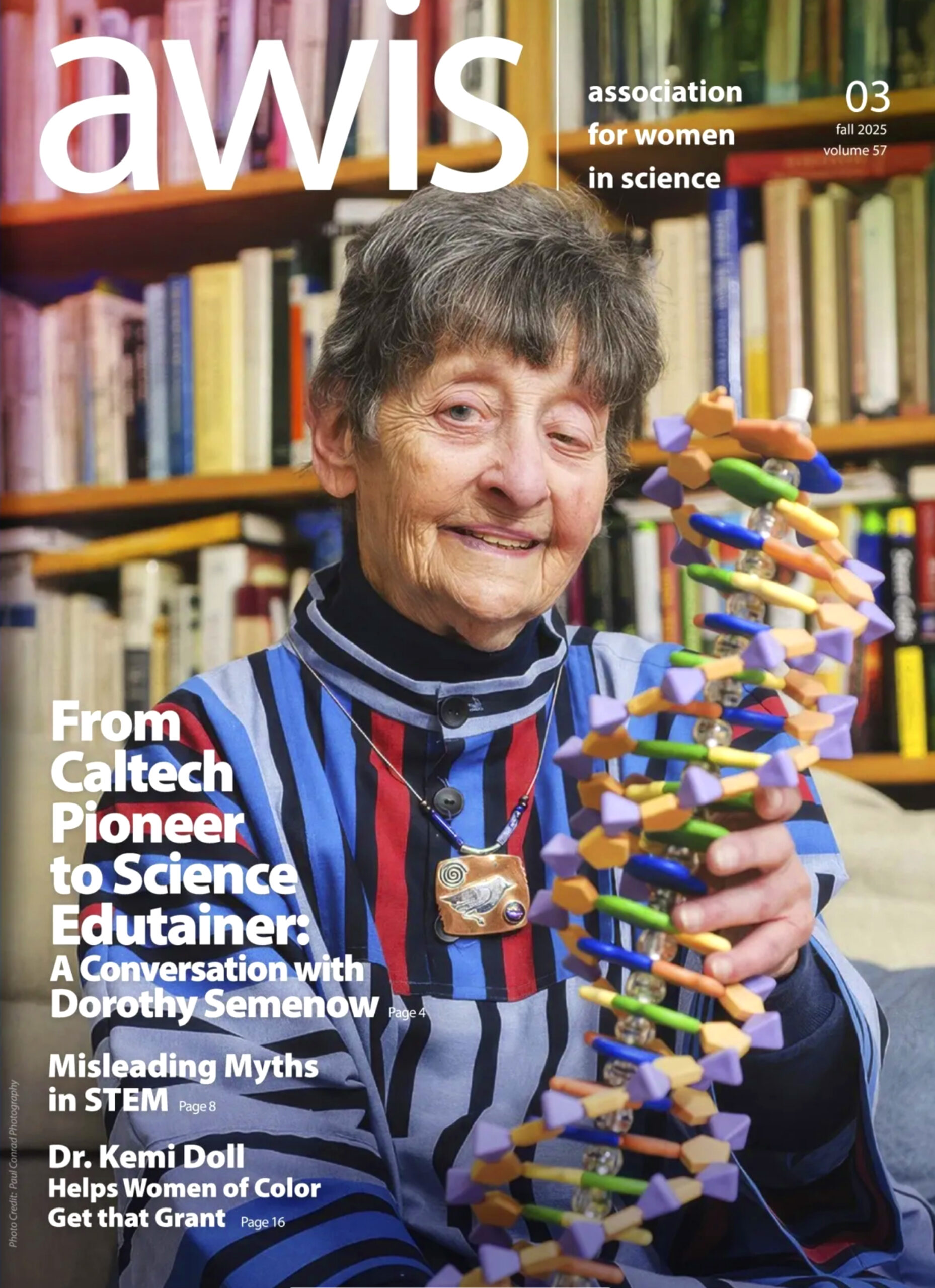
REVIEW: DNA Ahead Game & More: 3-in-1 Adventures in DNA by Remy Dou for The American Biology Teacher (2017) 79 (1): 74.

for more info: www.dnaahead.com
BOOK REVIEW | JANUARY 01 2017
Review: DNA Ahead Game & More: 3-in-1 Adventures in DNA
K–16 Educational Resources; Dr. Dorothy Semenow; http://www.dnaahead.com
From the mind of Dorothy Semenow – Caltech’s very first female graduate student and all-around mind sleuth – comes DNA Ahead & More, a game that takes players on a journey through the world of genetics and biotechnology. The art and the quality of materials alone speak to the labor of love that went into its development. Yet, more than art, this game represents a wealth of knowledge that any K–16 life science, science club, or continuing education instructor would want to tap into.
if you can play Monopoly, then you can play DNA Ahead. In short, players or teams of players move along the large board with the short-term goal of claiming spaces. Space is claimed contribute votes to the player or team. In the end, the player with the most votes wins the game. Of course, gameplay goes a little further than that, with opportunities to multiply votes or block opponents from obtaining votes. In fact, the rules of the game, while not complicated, can take some time to explain and feel a little overwhelming at first. Nevertheless, a “quick start” guide will get most groups going right away.
Incredibly, while the game is fun to play, it’s real stress comes from the DNA and biotechnology content found on the game board and game pieces. Players will not only have access to in-depth yet accessible science, but they will also learn about the “who” behind the science, with a special and authentic focus on traditionally, underrepresented groups in these fields. Children and adults will discover more than just facts; they will discover potential careers and professions.
Here is where the fun in DNA had truly lies: in what teachers can do with the game pieces outside of gameplay. The game cards offer a world of possibilities for development of student activities and or assignments, “Show and Tell cards” direct students in the representation of content through artistic and creative avenues. Other game cards, including “wow”iii” cards, can be used as foundations of topics that students can dive into by creating presentations around them. even the artwork itself is a learning tool, students can engage with the content right from the outset as they try to figure out the pictures meanings before reading the text. As Dorothy puts it, “the game aims to encourage, urge, spur, guide, and support users to do something, hopefully a creative thing, with what they learned from the materials.” Indeed, with some teacher prompting, this is absolutely achievable.
It is worth noting that the level of disassociation between subject area content and gameplay, may surprise some users. Essentially, one could play the game without having to understand or even read the DNA and biotechnology content. The game was purposefully designed that way to give users of all academic backgrounds exposure to materials that may otherwise intimidate them. Students level of engagement with the content will require active teacher involvement. The game box includes a guide to help educators take full advantage of the resources inside.
As a teacher, I could envision myself using DNA ahead game and more as a part of a unit lesson on DNA or biotech technology. Rather than sitting my students down for an hour of gameplay, I would set the game board and pieces on table and give students opportunities to roll a die and interact with the game several times a week. I would then use the content again access to a spring boards to activities that enrich the classroom curriculum. At the end of the unit, the class would tally votes and shower the winners with bragging rights. There is definitely more than one way to use this resource, and that, too, is part of the fun.
https://doi.org/10.1525/abt.2017.79.1.74
Remy Dou
ABT Department Editor
Florida international University
redou@fu.edu
Remy Dou taught high school life science for eight years before becoming an Albert Einstein Distinguished Educator Fellow. He now works as a graduate assistant at Florida International University contributing to STEM education research.
For column queries: redou@fu.edu